
Have you ever wondered what happens when a daily wage worker gets arrested? They don't call a top lawyer. They don't get VIP treatment. They sit in a crowded lockup, hoping the police will show them some compassion and let them go.
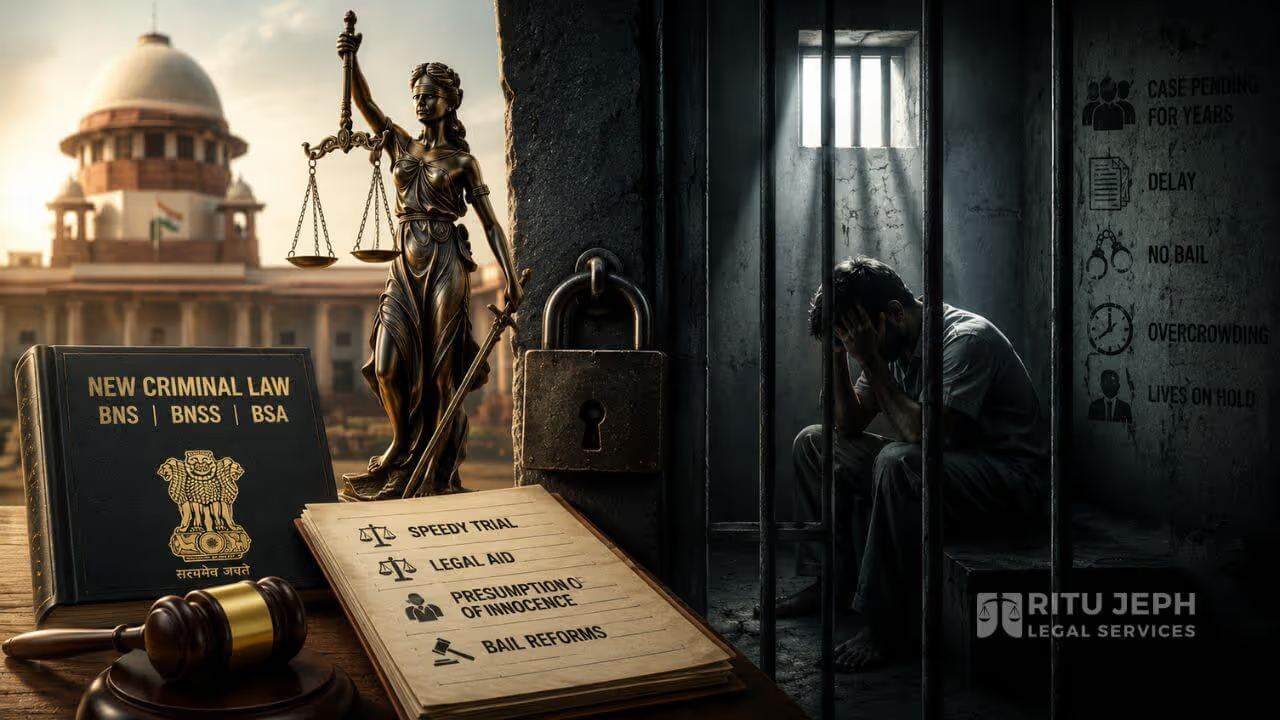
On July 1, 2024, India switched to a new criminal procedure law for new criminal cases. The old Code of Criminal Procedure (CrPC) was replaced prospectively by the Bharatiya Nagarik Suraksha Sanhita (BNSS) for fresh FIRs and investigations registered on or after that date. The government promised a modern, faster system. But if you look closely at the BNSS bail provisions, you will see the same old story.
The law looks great on paper. It talks about protecting rights and speeding up trials. But in the dusty corridors of lower courts, paper means nothing without enforcement.
Let us look at what the BNSS bail provisions actually say about undertrial prisoners. Under Section 479 of the BNSS, an undertrial can be released on bail if they have served half of the maximum sentence for the alleged crime, and the offence is not one where death or life imprisonment is a possible punishment. For first-time offenders who have never been convicted of any offence in the past, Section 479 says they should be released on bond if they have served one-third of the maximum sentence.
This sounds fair, right? If the police cannot prove your case in a reasonable time, you should not rot in jail forever. The BNSS bail provisions also require the Superintendent of Jail, not just the prisoner or his lawyer, to inform the court by a written application once an undertrial has completed one-third or one-half of the maximum sentence under Section 479.
But here is the reality check. Is anyone actually doing this?
Look at the National Crime Records Bureau (NCRB) Prison Statistics India 2022 report. The data shows that around 75.8 percent of all prisoners in India are undertrials. This means roughly three out of four people in Indian jails have not been convicted of any crime, even as newer figures show only a marginal easing since then.
Our prisons are running at about 131 percent of capacity as per the 2022 NCRB data, with only a slight improvement in occupancy in 2023 that still leaves many jails severely overcrowded. You have people sleeping in shifts because there is no space to lie down, something officially recorded in recent inspections in states like Kerala and repeatedly highlighted in reports on prison conditions.
The BNSS bail provisions promise that the jail authorities will track your detention period and tell the judge when you cross the statutory threshold for release. But police stations are understaffed and overworked. Court clerks handle hundreds of files a day. Jail superintendents struggle with overcrowded barracks and limited staff. Nobody has the time or software to track exactly when you cross the one-third or half-sentence mark under the BNSS bail provisions and to move timely applications for every eligible undertrial.
The Supreme Court has scolded the system many times. In the 2022 Satender Kumar Antil vs CBI judgment, the Court emphasized that bail is the rule and jail is the exception and linked this directly to Article 21 of the Constitution. The Court even asked the government to consider a separate Bail Act to simplify the process and reduce confusion.
The government ignored that advice. Instead, they kept the old system alive, now routed through the new BNSS bail provisions instead of the CrPC, without creating a standalone Bail Act.
Judges continue to deny bail routinely. The law keeps strict conditions for securing bonds. You need local sureties. You need property documents.
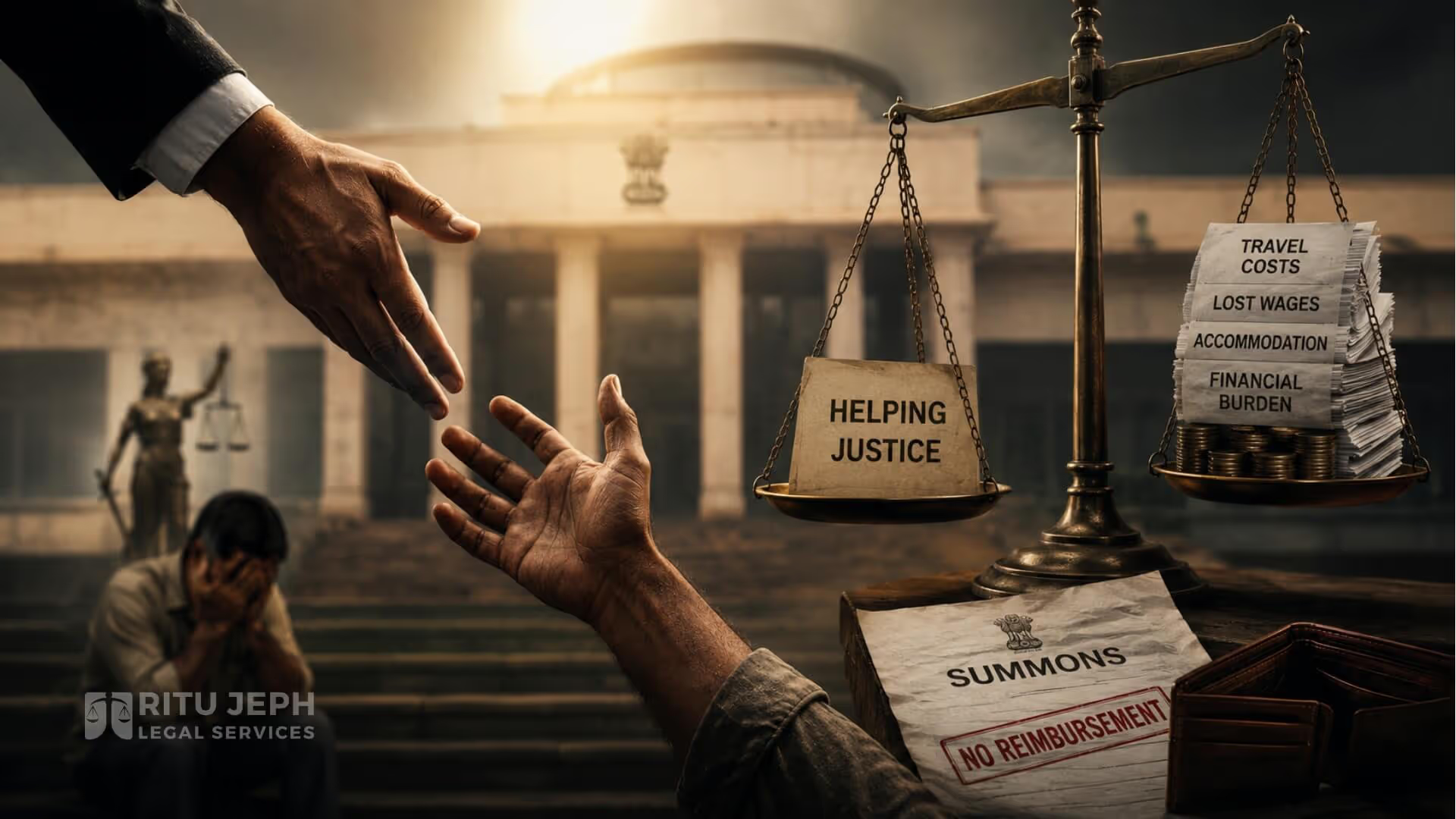
Imagine a migrant worker from UP or Bihar arrested in Delhi or Maharashtra. Their family is back in the village. Who will stand as a local surety for them? How will a daily wage earner arrange property papers?
The judge might grant regular bail under the BNSS bail provisions, but the prisoner stays in jail because they cannot arrange the surety. The law says you are free, but the system keeps you locked up.
Politicians hold press conferences about new laws. But ask any small shopkeeper who has fought a false case. They will tell you the law is just a piece of paper until the police and lower courts change their attitude.
The BNSS bail provisions are a copy-paste of the old CrPC logic in many ways. Section 479 simply repackages the old “half of the maximum sentence” rule from Section 436A CrPC, adds a one-third threshold for first-time offenders and a formal duty on jail superintendents, but keeps the same core approach where arrest is easy and bail is hard.
Until we have a system where police are punished for illegal detentions, new laws will not help. Until courts have enough judges to hear bail applications quickly, undertrials will keep suffering.
We do not need another legal text full of promises. We need lower courts where a poor man can get a bail hearing in three days without paying a bribe.
The new BNSS bail provisions will only work when the system stops treating an arrest as a punishment. Until then, the gap between the law book and the prison cell remains wide open.
Share Your Love

Related Posts