Book Appointment Now

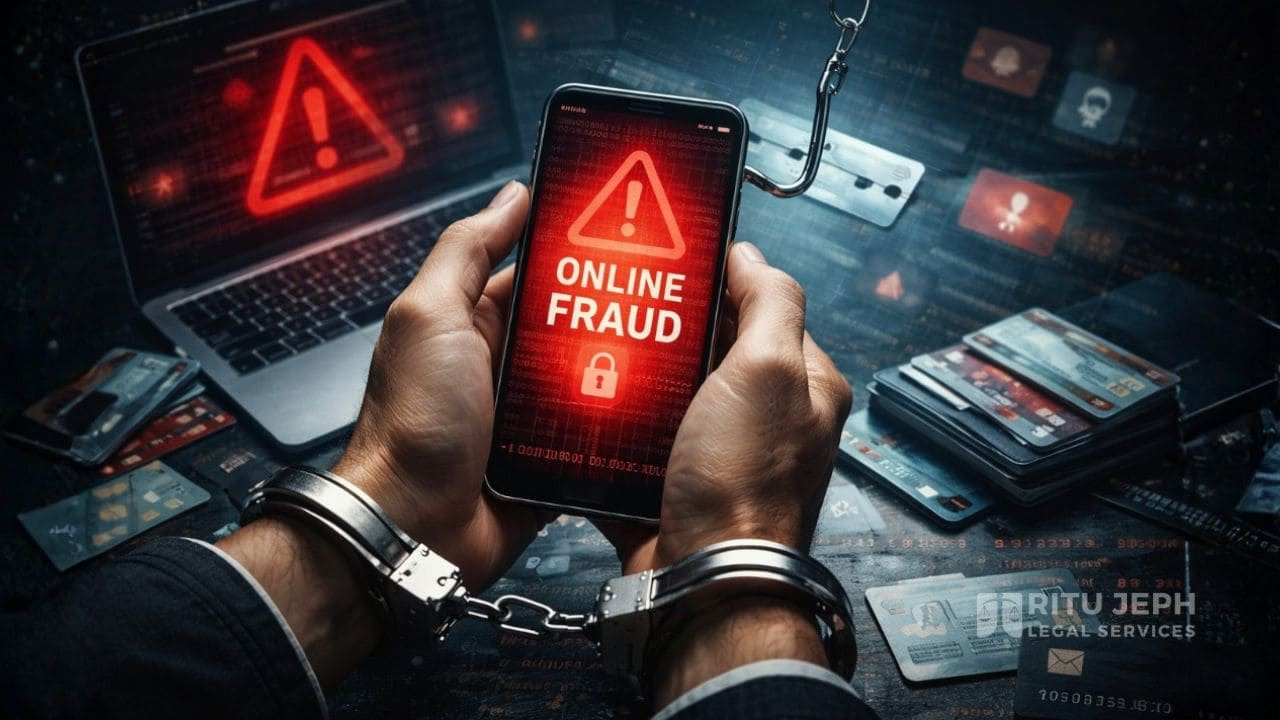
Reality of Digital Arrest: How Fake Police Calls Are Trapping Indians Online
The reality of digital arrest is a fake scam where fraudsters pretend to arrest you over video calls and demand money, but there's no such thing in Indian law; learn how it works, recent cases from 2025, and simple tips to protect yourself from losing crores like many victims have.
Have you heard about people getting calls from fake police officers who keep them on video calls for hours, claiming they’re under arrest? This is called the reality of digital arrest, and it’s one of the scariest online scams happening in India right now. With cybercrimes on the rise, it’s important to know what’s real and what’s fake so you can stay safe. In this article, we’ll explain the reality of digital arrest in simple words, look at how online fraud is growing, share real stories, and give easy tips to protect yourself and your family.
Online scams in India are getting worse every year, affecting millions of people. According to the latest data from the Indian Cyber Crime Coordination Centre (I4C), cybercrime incidents reported on the National Cybercrime Reporting Portal (NCRP) reached 2.27 million in 2024 alone. That’s a huge jump from previous years. As of December 2025, the I4C has helped save over Rs 7,130 crore that was almost lost to scams in about 23 lakh complaints. But sadly, people have still lost a lot of money – for example, Indians have lost more than Rs 1,900 crore to digital arrest and similar scams from 2023 to September 2025.
ALSO READ: Don’t Fall for the WhatsApp Missed Call Scam: Tips to Protect Yourself
These numbers show how serious the problem is. Cybercrimes have tripled since 2018, and financial fraud makes up most of them. A survey in urban India showed that nearly half of households have faced some kind of money-related scam, like fake charges on credit cards or tricks with UPI payments. The reality of digital arrest is part of this bigger issue, where scammers use fear to trick even smart people into giving away their savings.
So, what is the reality of digital arrest? It’s a scam where fraudsters pretend to be from the police, CBI, ED, or other government agencies. They call you and say something scary, like your phone number is linked to a crime or a parcel with drugs has your name on it. Then, they make you join a video call and tell you you’re under “digital arrest.” They might show fake IDs, use a background that looks like a police station, or even play sounds of sirens to make it seem real. They keep you on the call for hours or days, saying you can’t leave or tell anyone, and demand money to “clear your name.”
But here’s the important truth: There is no such thing as digital arrest in Indian law. Real police or government officials never arrest someone over a phone or video call. They don’t ask for money to settle cases either. The I4C has put out advisories, like one in March 2025, warning people about this. If the police need to talk to you, they come in person or send official papers – not random calls.
Even though it’s fake, many people fall for it because of the fear. Here are some real stories from 2025:
- A software professional in Bengaluru sold her flat and two plots of land to pay scammers Rs 2 crore. They pretended to be police and said her 10-year-old son was in trouble.
- In Nagpur, victims lost Rs 6 crore to digital arrest scams in just 11 months of 2025.
- In Karnataka, from January to November 2025, there were 293 cases of digital arrest, with losses of Rs 64.57 crore.
- A doctor in Odisha lost over Rs 12 lakh in December 2025 to fake cops who kept him on a call.
- In Hyderabad, a retired teacher almost lost Rs 18 lakh, but alert bank staff and police stopped it in time.
These cases show that the reality of digital arrest can hit anyone – doctors, teachers, business people, or tech workers. Scammers often target older people or those who are alone, but young folks get tricked too.
Besides the reality of digital arrest, there are other common online scams you should watch out for:
- UPI and QR Code Tricks: Scammers send fake QR codes that take money from your account instead of giving it. In cities like Bengaluru, this makes up a big part of complaints.
- Sextortion: Fraudsters call you on video, record something embarrassing, and threaten to share it unless you pay.
- Fake Job Offers on Telegram: They promise easy work-from-home jobs, pay you a little at first to build trust, then ask for big investments and run away.
- AI Voice Cloning: Using tech, they make a voice sound like your family member in trouble and ask for emergency money.
- Fake Links: Messages on WhatsApp about “free gifts” or “surveys” that steal your bank info when you click.
- OTP Sharing: Someone pretends to be from your bank and tricks you into giving your one-time password, then empties your account.
ALSO READ: Police at Your Door? 6 Must-Know Tips for Dealing with Police in 2025!
Why do these scams work? Because scammers use psychology – they create urgency, fear, or greed. But reporting them quickly can help. The NCRP website (www.cybercrime.gov.in) and helpline 1930 get thousands of calls every day. If you report a scam within a few hours, banks can freeze the money and you might get it back. So far, agencies have recovered Rs 2,800 crore for victims.
Now, let’s talk about how to protect yourself from the reality of digital arrest and other scams. These tips are simple and anyone can follow them:
- If you get a call from an unknown number claiming to be police or government, hang up right away. Real officials don’t demand money over the phone.
- Never share your OTP, PIN, passwords, or bank details with anyone, no matter how official they sound.
- Only scan QR codes from trusted places, like shops you know.
- Don’t click on links in messages from strangers – they could install bad software on your phone.
- Turn on two-step verification for your email, bank apps, and social media. This adds an extra layer of safety.
- Keep your personal info private – don’t share Aadhaar or PAN numbers unless necessary.
- Download apps only from official stores like Google Play or Apple App Store.
- If something happens, call 1930 or report on cybercrime.gov.in immediately. The faster you act, the better.
The reality of digital arrest is scary, but knowledge is your best weapon. Scams don’t just take money – they can ruin your peace of mind and trust. By staying alert and sharing this info with family and friends, you can help stop these frauds. Remember, if it sounds too urgent or too good to be true, it’s probably a scam. Stay safe online!